Bedford Kennel
Our StoryTestimonialsGalleryResources
Our BostonsAbout the Breed
Pugs
Available PuppiesAvailable AdultsPlanned LittersMeet the Parents
Adoption ProcessOur PoliciesHealth TestingNutritionFAQ
Contact
Apply
Bedford Kennel crest with a Boston Terrier and a PugBedford Kennel

CKC registered Boston Terriers and Pugs, bred for health, temperament and companionship.

Buckhorn, Ontario, Canada

About

  • Our Story
  • Testimonials
  • Gallery
  • Resources

Boston Terriers

  • Our Bostons
  • About the Breed

Available

  • Available Puppies
  • Available Adults
  • Planned Litters
  • Meet the Parents

Adoption

  • Adoption Process
  • Our Policies
  • Health Testing
  • Nutrition
  • FAQ

More

  • Pugs
  • Contact
  • Apply

Contact

  • info@bedfordkennel.ca
  • 249-644-2034
  • Send a Message

© 2026 Bedford KennelBreeder LoginMade with Whelpify

Follow usFacebookInstagramXYouTube

HomeOur StoryApplyTestimonials

Health Testing

Breeding and Health Testing

Our focus is on our bloodlines, extensive health testing and keeping current with cutting edge research and genetic testing. It continues to be on quality and not quantity.

Why We Test

Our Breeding Philosophy

We breed for the total dog, with an emphasis on health and temperament, while breeding to standard.

Read Our Story
01

Where Our Program Stands

We got our first Bostons starting in 2001. Our Boston breeding program is currently in a period of restructuring and refinement. Our current focus is our bloodlines, extensive health testing and keeping current with cutting edge research and genetic testing.
02

Canadian, American and European Bloodlines

Our Bostons are a blend of Canadian, American and European bloodlines. We have imported our Bostons from reputable breeders in the United States and in European countries.

We do so to promote genetic variability in our bloodlines. More specifically, we do it to prevent homozygosity, which is having two identical alleles of a particular gene or genes.

03

Why We Avoid Breeding Relatives

Breeding related animals produces more consistent and predictable traits, as a result of homozygosity, but a loss in vitality and vigour is also the result. Breeding related animals also reduces fertility and produces smaller offspring, early death and a shorter lifespan. The higher the level of inbreeding, the greater the detrimental effects (Beuchat, 2015).

04

Health and Temperament First

Given the pitfalls of breeding for show titles, where closely related dogs are bred to achieve consistency and predictability, and given that breeds are created by inbreeding to begin with, our focus remains on health and temperament first and foremost.

05

Where Showing Fits

One must also breed to standard, and we feel that showing is important in maintaining the integrity of the breed standard and of the breed as a whole. Show wins are not our sole focus, however. We enjoy showing, and we try to get to shows when our family life allows.

The inbreeding coefficient is not a measure of health. It is a measure of risk.

With or without DNA tests, it is the best way to ascertain the level of genetic risk one takes when breeding (Beuchat, 2015).

Inbreeding

Inbreeding Coefficients Explained

We aim to breed puppies with inbreeding coefficients (ICs) as close to zero as possible. This is how we read the number.

01

What the Number Means

The inbreeding coefficient is the estimated level of inbreeding, or homozygosity, of a particular mating. It is the probability of inheriting the same allele from an ancestor on both sides of the pedigree, and the fraction of all of the genes of a dog that are homozygous (Beuchat, 2015).

A low inbreeding coefficient has a lower risk, but supposedly also lower benefits as it relates to consistency in type. A high inbreeding coefficient would produce more consistency in type in the puppies, but there would also be a significant loss of vigour and health (Beuchat, 2015).

02

Where the Harm Starts

The detrimental effects of inbreeding start to become evident at 5%. At 10% there is a significant loss of vitality and an increase in the expression of detrimental recessive mutations in puppies (Beuchat, 2015).

An inbreeding coefficient of 10% is considered to be the extinction vortex, in which smaller litters, higher mortality and the expression of genetic defects have a negative effect on the size of the population. As the population gets smaller, the incidence of inbreeding goes up, culminating in a negative feedback loop that eventually drives a population to extinction (Beuchat, 2015).

In terms of health, an inbreeding coefficient of 5% or less is most ideal. Coefficients of 5 to 10% will supposedly have modest detrimental effects on the offspring, while levels above 10% will yield significant effects on the quality of the offspring and on the breed as a whole. A breeder needs to weigh these against the benefits they anticipate (Beuchat, 2015).

03

Our Own Limits

All things considered, and weighing the benefits and risks, we aim to breed puppies and dogs with inbreeding coefficients as close to zero as possible. It is recommended that ICs are calculated over at least 8 to 10 generations (the more the better) and are preferably 5% and under (Beuchat, 2015).

In the past, we always regarded a 6.8% inbreeding coefficient as an upper limit, as suggested in the agricultural research available to us at that time, while trying to keep as low as possible. With advancements in genetics in the veterinary field, we now consider 5 to 6.8% over 8 to 10 generations to be an upper limit.

That said, we have only bred a couple of litters close to these upper limits in over twenty years. We do not breed dogs at these upper limits routinely.

04

Why We Count Ten Generations

Our ICs are calculated on ten generations, so they read higher than they would if they were calculated over 8 generations.

As Beuchat (2015) explains, the fewer generations used in calculating the inbreeding coefficient, the better (that is, lower) it will appear to be. That is not an accurate assessment of the true degree of homozygosity in a dog, so it does not reflect the true level of inbreeding depression and risk of genetic disease.

05

Risk, Not Health

A breeder can use the inbreeding coefficient to reduce the risk of genetic disorders in their puppies, as it is an estimate of the loss of vigour and general health expected from the expression of recessive mutations. It is not a measure of health, however. It is a measure of risk (Beuchat, 2015).

Every dog has many mutations, and one has no way of knowing about them if the dog has only one copy and it is not expressed. If one breeds two dogs with some of the same mutations, one can expect the puppies to be homozygous for 25% of them. Many of these mutations may have very few effects, and one may not recognize them as a disease. It is the accumulation of these few effects that causes the loss of vigour and vitality in inbred animals, referred to as inbreeding depression (Beuchat, 2015).

06

Genetic Diversity by DNA

As well as our dogs' ICs, we consider and compare their genetic diversity (heterozygosity) percentage, as determined by DNA. Interestingly, one dog can have a low IC and a higher homozygosity percentage, and another dog can have a relatively high IC and a lower homozygosity percentage. Cool, right? A breeder must consider it all.

The typical range of heterozygosity for Boston Terriers is between 31 and 37% (Wisdom Panel). The higher the percentage, the greater the heterozygosity.

On Our Dogs' Records

Tests on Our Breeding Dogs

These are the tests and certifications that appear on our dogs' records. Results are reported dog by dog, in the words on the record (Clear, Clear by parentage, Carrier or Normal), on each dog's own page.

  • Juvenile Hereditary Cataracts (HSF4)DNA. Boston Terriers.
  • Degenerative MyelopathyDNA. Boston Terriers and Pugs.
  • Chondrodystrophy and Type I IVDD (CDDY/IVDD)DNA. Boston Terriers.
  • Optimal Selection panelDNA. Includes Hyperuricosuria and Deafness and Vestibular Dysfunction.
  • Piebald geneDNA. Boston Terriers.
  • Cardiac examVeterinary exam, with the date on the record.
  • Patella evaluationVeterinary exam, with the date on the record.
  • Pug Dog Encephalitis (PDE)DNA. Pugs.
  • Pyruvate Kinase Deficiency (PKLR exon 7, Pug variant)DNA. Pugs.
  • Primary Lens Luxation (ADAMTS17)DNA. Pugs.
  • Malignant Hyperthermia (RYR1)DNA. Pugs.
  • Inbreeding coefficientOn each dog's record and on every puppy's pedigree.
  • Genetic diversity (heterozygosity) percentageBy DNA.

DNA Testing

DNA Panels and Their Limits

A DNA test answers one question about one gene. We test widely for that reason, and we do not treat a DNA result as a diagnosis.

01

Why We Run a Full Panel

DNA tests tell you only about one particular gene, which is known as a risk for a particular disease. To breed healthy animals, one needs to consider all of the potential risks, and there are many more recessive mutations than the ones we have DNA tests for (Beuchat, 2015). This is why we are running Optimal Selection panels on our dogs.

02

What We Have Always Tested

In the past, we always at least certified patellas, heart (by auscultation) and Juvenile Hereditary Cataracts, and then Degenerative Myelopathy by DNA. When the Hyperuricosuria test came out, we started testing for that too. We have also tested for the piebald gene in our Bostons.

03

What the Panel Covers

The Optimal Selection panel screens for a very long list of inherited conditions identified across many breeds. Among them are Degenerative Myelopathy, Hyperuricosuria, Chondrodystrophy and Intervertebral Disc Disease risk, Limb-girdle Muscular Dystrophy (discovered in the Boston Terrier), Pyruvate Kinase Deficiency (discovered in the Pug), Primary Lens Luxation, and Deafness and Vestibular Dysfunction.

This panel may change over time. Please look at each dog's individual results.

04

What DNA Cannot Tell Us

It is important to note that DNA testing is not diagnostic, and it does not absolutely guarantee that a dog will not get a disease or illness. It is a measure of likelihood, based on a dog's genes. DNA tests can never completely replace veterinary examination, certification and testing.

Genetic testing gives a probability of health or of susceptibility to disease. The environment, and how the puppy or dog is raised, determines the expression of those genes.

Dog By Dog

See Each Dog's Results

Each of our breeding dogs has a page with their own results. Puppies go home with copies of their parents' health tests and certifications, the parents' 5 generation pedigrees and their own pedigree with its inbreeding coefficient.

  • Our DogsEvery breeding dog, with their registered name, parents and health results.
  • Boston TerriersOur Boston Terrier program and the dogs in it.
  • PugsOur Pugs, the Special Editions in our kennel history.
  • About Boston TerriersMore on the health of the breed, including luxating patellas.
  • Adoption ProcessThe paperwork, guarantee and records each puppy is placed with.

Condition By Condition

Conditions We Screen for

These are the breed specific issues we test and certify for, in addition to the Optimal Selection panel.

01

Juvenile Hereditary Cataracts

Cataracts, meaning poor vision due to opacity of the lens, are a known problem in Boston Terriers. Our Bostons are DNA certified clear, non-carriers of Juvenile Hereditary Cataracts. Each dog's record shows their own result.

02

Patellas

Luxating patellas (dislocating knees) are the most common health problem in Bostons, and the most difficult and frustrating problem for breeders to eradicate, despite our best efforts, because it is a polygenetic problem. It is not purely genetic: luxating patellas can be caused by environmental influences, the bone and cartilage formation of the patellas, loose or stretched ligaments, or developmental issues.

This is why it is important that breeders test their breeding dogs before breeding. We have always certified patellas, and each evaluation is on the dog's record with its date.

03

Hearts

We have always certified our dogs' hearts by auscultation. Each cardiac exam is on the dog's record with its date.

04

Degenerative Myelopathy and Hyperuricosuria

We test for Degenerative Myelopathy by DNA. When the Hyperuricosuria test came out, we started testing for that as well.

05

The Piebald Gene and Deafness

We have tested for the piebald gene in our Bostons, as it has been hypothesized to be the cause of congenital deafness in related breeds and in progenitors of the breed, such as Bulldogs and Bull Terriers.

Please note that there is no genetic marker for breed specific congenital deafness in the Boston Terrier to date. We do test for Deafness and Vestibular Dysfunction in the Optimal Selection panel. Genetics aside, there are many reasons for deafness. We will continue to screen our dogs, follow the research and test for all possible causes.

06

Pug Dog Encephalitis

Our Pugs are clear, non-carriers of Pug Dog Encephalitis (PDE). Adding PDE N/N dogs to our program has been one of the biggest challenges we have found with Pugs.

Our Pug records also list Degenerative Myelopathy, Malignant Hyperthermia, Primary Lens Luxation, Pyruvate Kinase Deficiency and a patella evaluation.

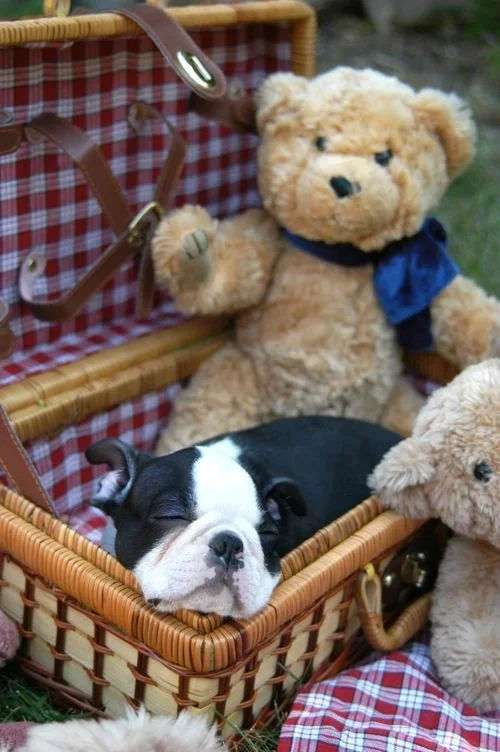
A Boston Terrier puppy asleep in a picnic hamper beside a teddy bear
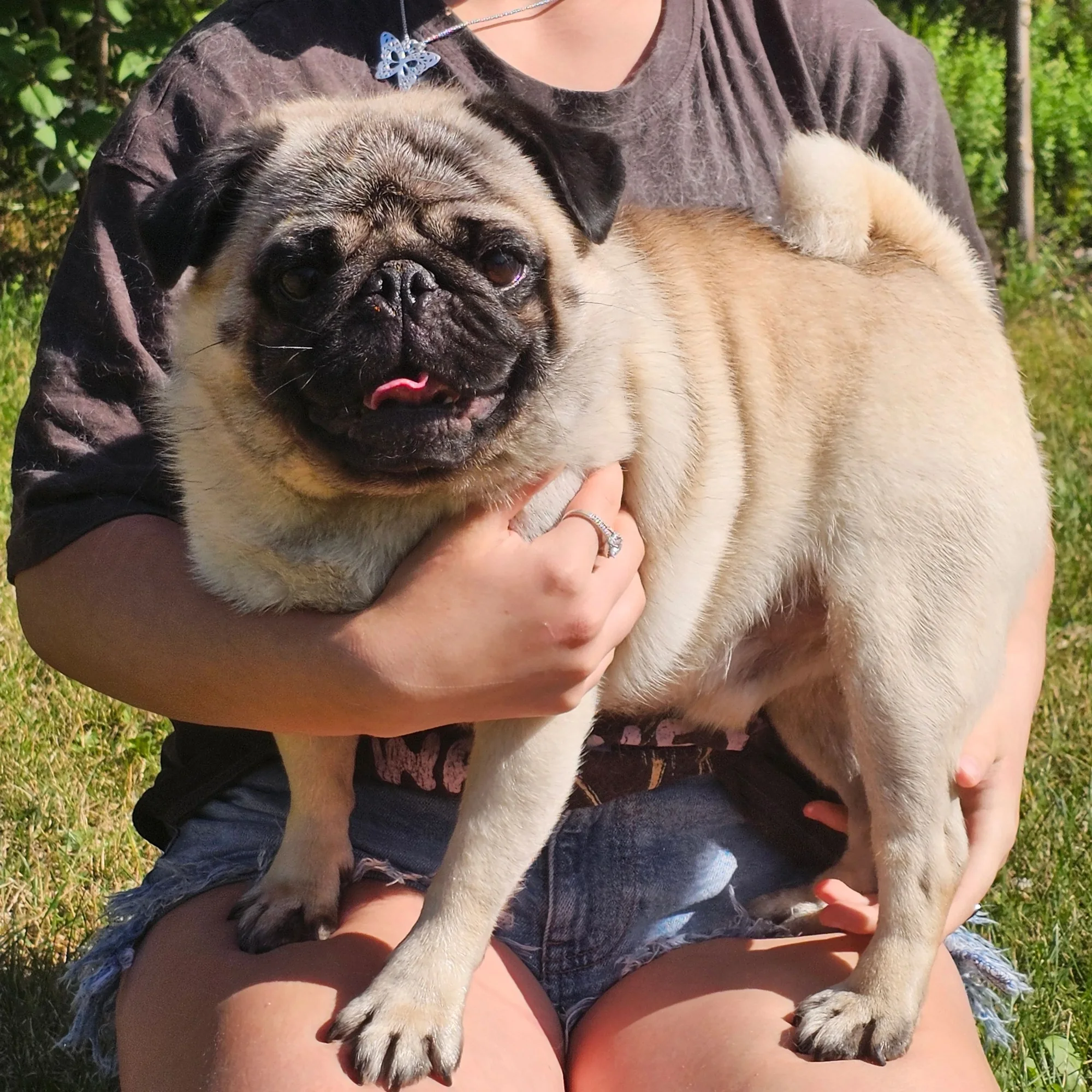
Bax, a fawn Pug, held in someone’s arms
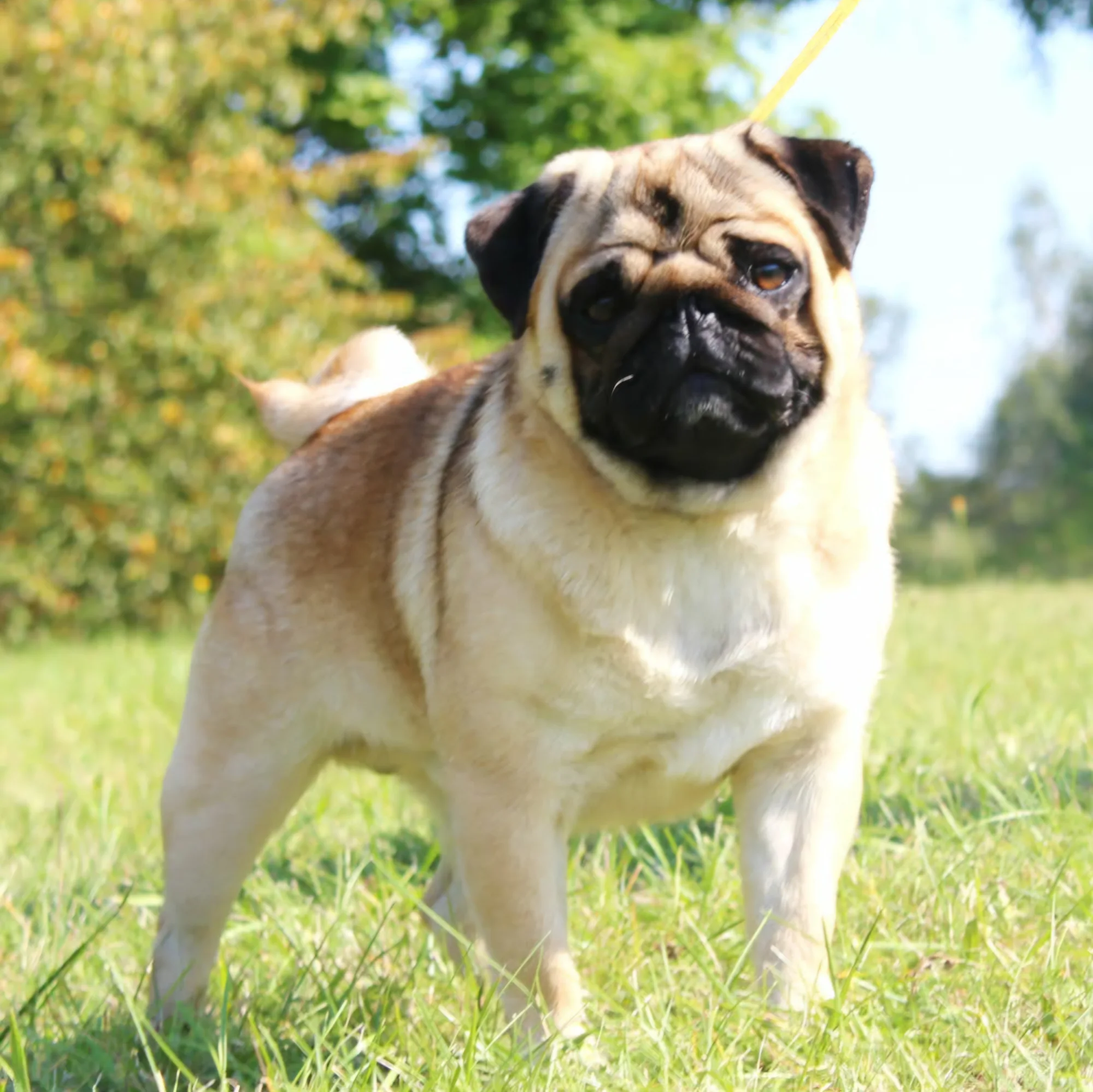
Nash, a fawn Pug, standing in sunshine
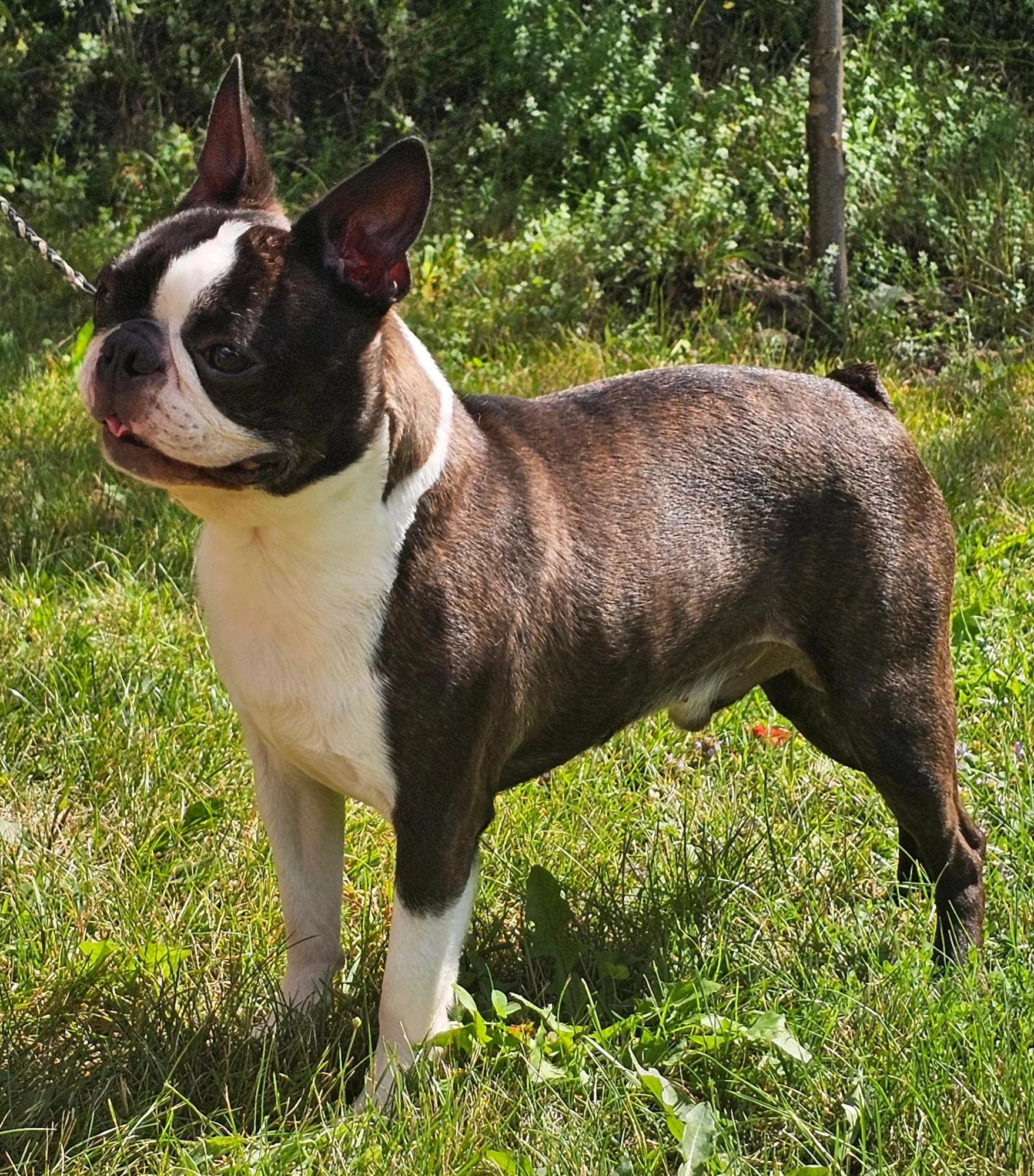
Rio, a brindle and white Boston Terrier, looking to one side
A newborn Boston Terrier litter asleep in a row
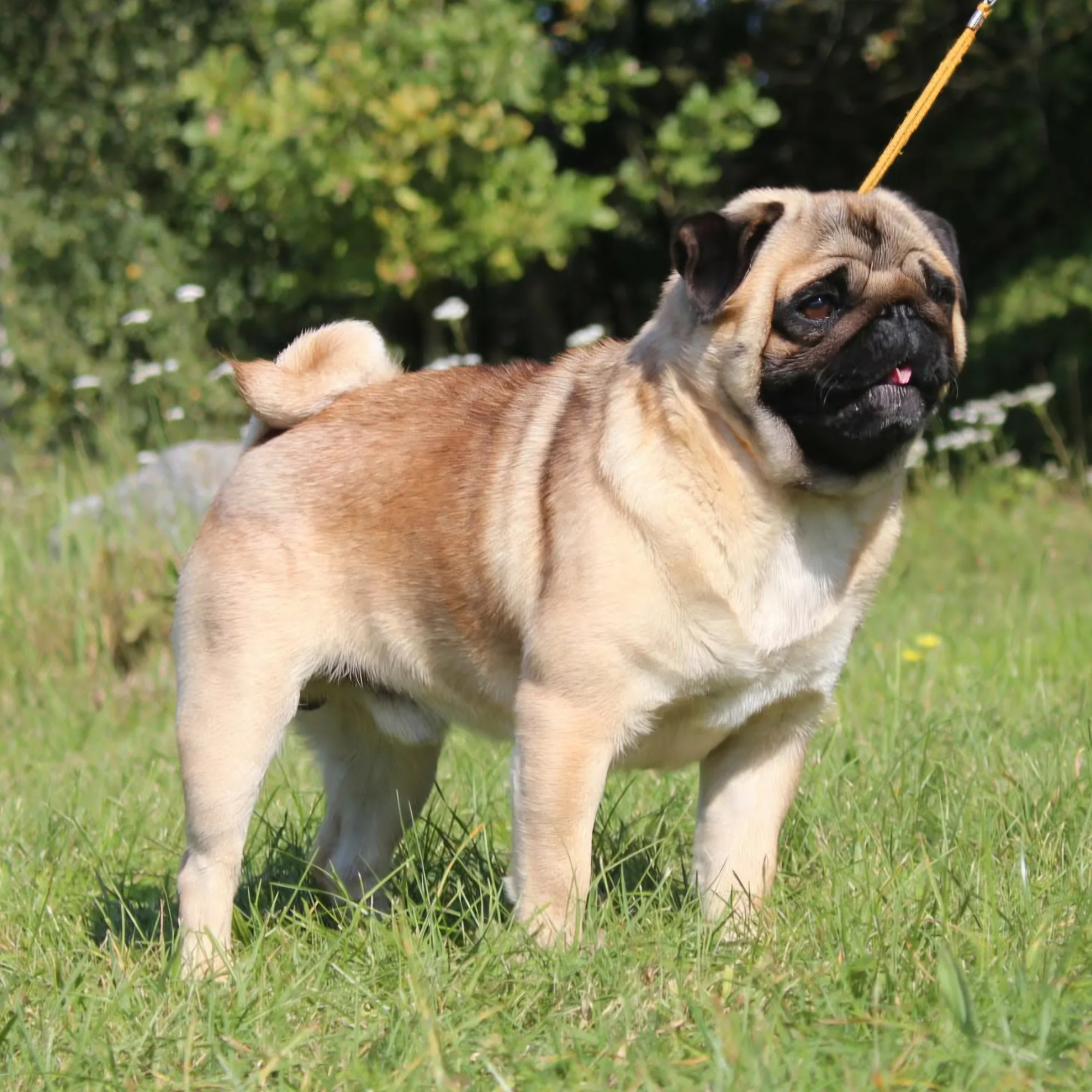
Nash, a fawn Pug, standing on grass

Questions

Ask Us About Our Testing

We provide proof of our dogs' clearances, and we are happy to answer questions about a test, a result or a pedigree.

Meet Our DogsContact Us