Bedford Kennel
Our StoryTestimonialsGalleryResources
Our BostonsAbout the Breed
Pugs
Available PuppiesAvailable AdultsPlanned LittersMeet the Parents
Adoption ProcessOur PoliciesHealth TestingNutritionFAQ
Contact
Apply
Bedford Kennel crest with a Boston Terrier and a PugBedford Kennel

CKC registered Boston Terriers and Pugs, bred for health, temperament and companionship.

Buckhorn, Ontario, Canada

About

  • Our Story
  • Testimonials
  • Gallery
  • Resources

Boston Terriers

  • Our Bostons
  • About the Breed

Available

  • Available Puppies
  • Available Adults
  • Planned Litters
  • Meet the Parents

Adoption

  • Adoption Process
  • Our Policies
  • Health Testing
  • Nutrition
  • FAQ

More

  • Pugs
  • Contact
  • Apply

Contact

  • info@bedfordkennel.ca
  • 249-644-2034
  • Send a Message

© 2026 Bedford KennelBreeder LoginMade with Whelpify

Follow usFacebookInstagramXYouTube

HomeOur StoryApplyTestimonials

Breed Guide

About Boston Terriers

The Boston Terrier is often called the American Gentleman, for the well dressed look and for the gentle disposition. This is the breed as we have come to know it since our first Boston in 2001.

History

An American Breed From Boston

The Boston Terrier is an American creation, from the city of Boston. It was originally bred out of curiosity and as a pit fighter, a sport that was popular in Boston in the mid 19th century.

The first Boston Terriers were the product of a Bulldog and the now extinct White English Terrier (similar to the Bull Terrier), crossed in Massachusetts in the mid 19th century. Those first Bostons were much heavier than today's Boston, much like the Staffordshire Bull Terrier, and were further crossed to the French Bulldog for more refinement. The result was a compact, well-muscled dog with the distinctive markings now characteristic of the breed.

The original Boston breeders would not likely appreciate the Bostons seen today. They would probably consider the breed much too refined. Hooper's Judge is the ancestor of almost all true modern day Boston Terriers. We have traced our lines back to Hooper's Judge and maintain an extensive pedigree database.

The Boston Terrier was the most popular breed in the United States between 1929 and 1935. Because of their conformation (large head, small pelvis), Bostons are difficult and expensive to reproduce, as a caesarean section is necessary approximately 95% of the time or more. More specifically, a study conducted in 2009 suggests the figure to be 92.3% (Evans et al., 2009).

So, usually only the best representatives of the breed are used in breeding programs today, and the overall quality of Bostons has been well maintained, despite a period of immense popularity.

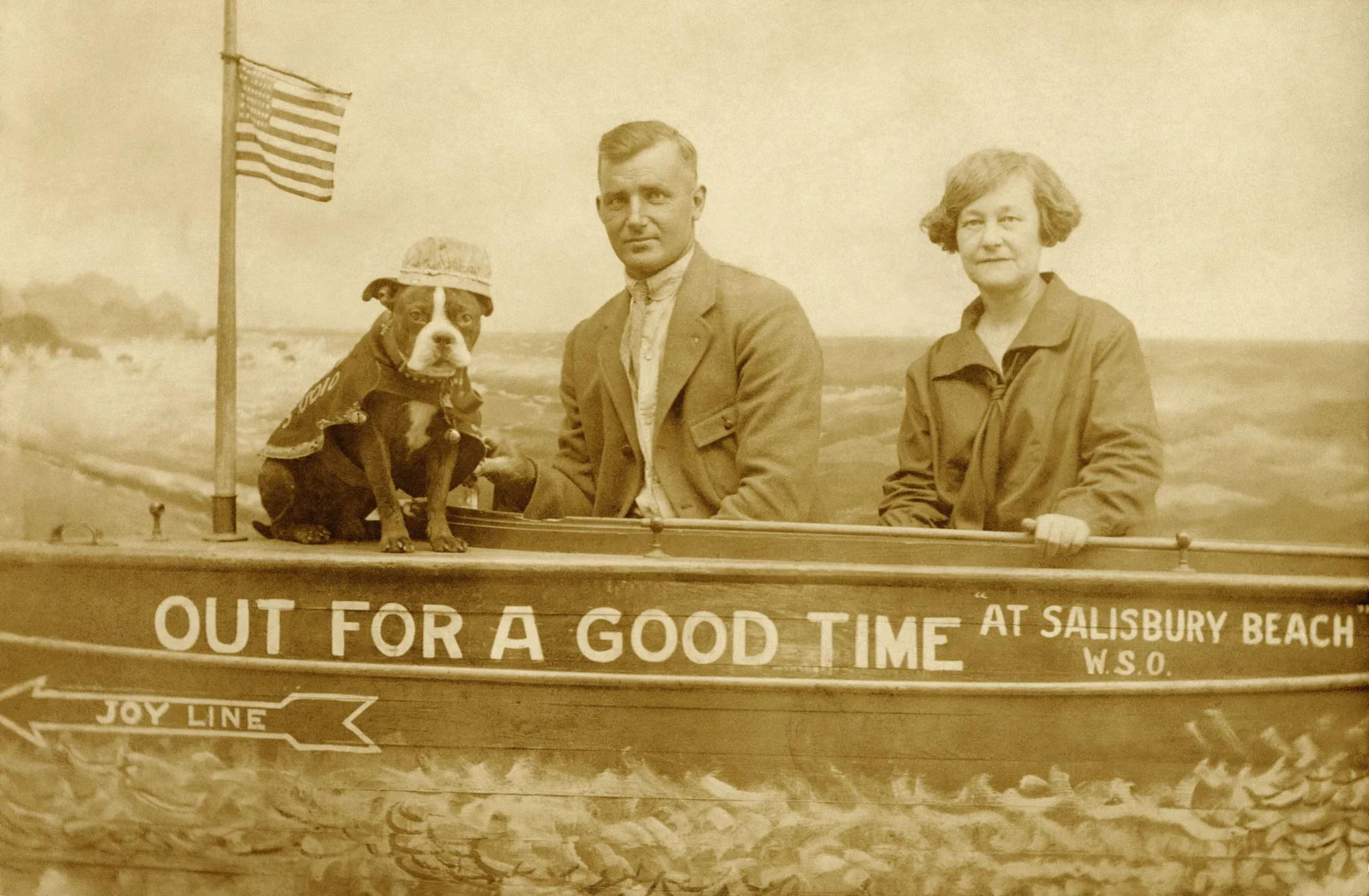
A sepia studio postcard of a couple in a boat with a Boston Terrier, lettered Out for a good time at Salisbury Beach

Temperament

Temperament and Character

Bostons excel as companions and house dogs. They are gentle, very affectionate with children and their families, and very clever.

01

The American Gentleman

Although Boston Terriers descend from fighting dogs, the Boston is often called the American Gentleman, because of the well dressed appearance and also because of a characteristically gentle disposition and suitability as a companion and house pet.

Bostons are not considered to be scrappers. They can take care of themselves when threatened, however, and are a very confident breed by nature. While not working terriers, Bostons act like other short-haired terriers, although not quite as intense.

02

Bred for Companionship

Since the decline of pit fighting, Bostons have been bred exclusively for companionship. They are very adaptable and generally open to new experiences. The Boston has a unique sense of humour, loves to play and makes a lively, entertaining companion.

They require regular, daily, compassionate care and a stimulating environment to thrive and live a full, happy and healthy life. They are not outdoor or kennel dogs. They need to be with people and live in the home. Plain and simple, it is not humane otherwise.

03

Dependent on Their People

Bostons are extremely dependent on human companionship, and can get quite annoyed, offended and depressed if they do not get it. They prefer human company to that of other dogs, cats and other animals, although they are known to get along very well with them if introduced properly and socialized from an early age.

Because Bostons bond so closely with their families, some are prone to separation anxiety and destructive behaviours. Crating your Boston when you are away usually prevents and eliminates this problem, provided that the crate is never used as punishment or isolation.

04

A Confident Streak

Most Bostons tend to have a dominant streak, or what I prefer to call a confident streak. They are highly intelligent and should be trained and raised with the same expectations one would have of a large breed, with lots of positive reinforcement.

Families need to set clear boundaries for acceptable behaviour right from puppyhood. Just because they are small does not mean they are easier to train. Bostons are very intelligent and need an equally intelligent owner to keep up with all of their antics. Nobody wants an obnoxious adult Boston around.

05

Soft Underneath

Once owners and families establish that they are the pack leader, some Bostons can be very soft tempered, and most do not like their families being upset with them. Bostons do not require a firm hand (no dog does, in my opinion). Training should be consistent, fun and positive at all times.

06

Jumping Up

Most Bostons have a habit of jumping up on you and your guests, to get attention and out of excitement. Training should start early in puppyhood to help curb this behaviour, although it would be unrealistic to expect a Boston to be perfect in this regard.

07

Eating Feces

Some dominant Bostons eat the feces of other dogs (coprophagia). Some theorists suggest it is due to an imbalance or lack of nutrients in the diet. Others suggest it is due to their dominant nature, in that they try to remove the scent of other dogs from their territory, as it is also observed in Bostons who eat the highest quality diet. We support the latter theory.

Coprophagia is a normal canine behaviour and can be seen in most other breeds, although some suggest it may be more common in more dominant dogs and breeds. It can also be instinctive and biological in nature. Mothers, and sometimes other dogs in a pack (wolves, coyotes, wild dogs), can be observed eating the feces of puppies and younger dogs to remove their scent from the environment and keep predators away from their young.

08

Showing, Obedience and Agility

Bostons are highly intelligent and can make good show dogs, but they can be challenging to show as well, because of their zest for life and their excitement at being around all those people. Bostons also do well in the Obedience ring and are gaining popularity as agility dogs.

Quick Facts

The Boston at a Glance

In Canada, Bostons are divided into three weight classes.

01

Lightweight

15 lb and under.

02

Middleweight

15 to 20 lb. The majority of Bostons today weigh between 15 and 20 lb.

03

Heavyweight

20 to 25 lb.

04

Square in Outline

A Boston is supposed to be very square in appearance, with their height equalling their length.

05

Lifespan

Bostons are known to live 11 to 15 years, or more if raised as naturally as possible.

06

Exercise Needs

Moderate. A Boston's needs can be met playing in the house and outside.

Appearance

Size, Coat and Colour

We breed to the breed standard, not trends.

01

What We Aim for

We are aiming to produce square middleweight (15 to 20 lb) and low end heavyweight (20 to 22 lb) Boston Terriers of good bone and substance.

02

Coat and Accepted Colours

The coat is short, smooth, bright and fine in texture. The colours are brindle and white, seal and white, black brindle and white, or black with white markings.

03

Disqualifying Colours

Solid black (no white), black and tan, and liver or mouse (brown, chocolate, red) colours are disqualifications and are not within breed standard. Fad colours such as blue, liver and lilac are also not acceptable, and were not in the genome of the founding dogs.

04

Our Position on Non-Standard Colours

We do not breed for red, brown, fawn, lilac or blue and white Bostons, and we do not get them. These are not CKC recognized breed colours. Dogs of these colours cannot be shown in conformation events and will be disqualified.

They are not rare colours. They are unrecognized colours, because they were not in the genome of the original foundation dogs, and interbreeding was introduced at some point in order to produce them. Breeders who breed to standard, using dogs that truly go back to the foundation dogs of the breed, do not miraculously produce puppies of disqualifying colours. To register such a puppy in Canada, a breeder must indicate on the registration form that it is an acceptable colour when it is not, which is being untruthful.

05

Eyes

Eyes should be dark brown in colour, not amber or light. Blue eyes are not rare or desirable, and are not within breed standard. They are defects in the breed, although unless there has been an injury of some kind, these dogs usually have full sight and normal vision for the duration of their life.

We breed to the breed standard, not trends. Quality never goes out of style.

The only good reason to breed is to improve the breed.

Daily Life

Care, Exercise and Training

Bostons are true house dogs. They can adapt to almost any family or living arrangement, as long as they are kept indoors with their people.

01

Indoors With the Family

Bostons are companion dogs and are not outdoor dogs. They can adapt to almost any family or living arrangement, as long as they are kept indoors with their families.

02

Heat and Cold

Bostons and other brachycephalic breeds do not tolerate extreme temperatures, hot or cold, very well. Because of their short noses, they tend to have trouble breathing in periods of heat and cold, and when stressed by exertion.

03

Exercise

A Boston's need for exercise is moderate, and can be met playing in the house and outside. Our own dogs get lots of regular indoor and outdoor play in our fenced yards, along with walks around our waterfront neighbourhood.

04

Crate Training

Our own dogs are crate trained and house-trained, and are crated when we are not home and at night. A crate should never be used as punishment or isolation.

05

House-Training and Leash Manners

Some Bostons can be stubborn, especially if positive reinforcement is not used, and slow to house-train and leash break. They often train very easily with consistent, positive reinforcement. Once the limits are set and their owners are consistent, Bostons adapt well and adhere to the rules.

06

Barking

Bostons are generally not yappy or prone to incessant barking. They can get loud and boisterous when playing with other dogs and animals.

Before You Decide

Is a Boston Right for You

A Boston is likely to suit you if these describe your home.

  • Your dog will live indoors, with the familyThey are not outdoor or kennel dogs.
  • Someone can give daily companionship and careBostons are extremely dependent on their people.
  • You will train with consistent positive reinforcementNo firm hand is needed.
  • You will set clear boundaries from puppyhoodSmall does not mean easier to train.
  • You are willing to crate trainNever as punishment or isolation.
  • You can keep them comfortable in extreme heat and cold
  • You can live with some snoringSome Bostons have a tendency to snore.
  • You can forgive an excited greetingMost Bostons jump up, and few are ever perfect about it.
  • You enjoy a dog with a sense of humour

Health

Health in a Short-Faced Breed

Bostons are considered by most to be the healthiest of the brachycephalic breeds.

How We Health Test
01

Breathing

Because of their short muzzles, Bostons tend to have trouble breathing in hot and cold temperatures and when stressed by exertion. Some Bostons also have a tendency to snore.

In my opinion and experience, Bostons' breathing has improved significantly over the last twenty years in Canada. In our experience, breathing difficulty is not usually clinically significant in established and healthy lines.

02

Eyes

Some Bostons have prominent eyes, and they can be prone to eye injuries because of it.

03

Known Problems in the Breed

Heart and skin tumours, luxating patellas (dislocating knees), cataracts (poor vision due to opacity of the lens), deafness, Cushing's Syndrome (adrenal dysfunction resulting in obesity and muscle weakness) and difficulty whelping, due to their narrow hips and large heads, are known problems in the breed.

04

Luxating Patellas

Luxating patellas are the most common health problem in Bostons, and the most difficult and frustrating problem for breeders to eradicate, despite our best efforts, because it is a polygenetic problem.

It is not purely a genetic problem. Luxating patellas can be caused by environmental influences, the actual bone and cartilage formation of the patellas, loose or stretched ligaments (which hold the bones in place), or developmental issues. Some also speculate that a high calcium-phosphorus diet can cause luxating patellas. To my knowledge, there have not been any statistically significant studies that support this theory.

05

Why Many Never Need Surgery

Luxating patellas are to Bostons what hip dysplasia is to Pugs or Bulldogs: having them does not mean a dog will require surgery. Most other breeds with lower grades of luxating patellas will show signs of it and their quality of life will be affected. A Boston often does not show any signs at all, and can live a full, quality life without requiring surgery.

This is why it is important that breeders test their breeding dogs before breeding. While luxating patellas seem to be impossible to control, most breeders are trying to reduce the chances of this problem, to get that ever elusive perfect knee and a line clear of luxating patellas.

06

A Well-Maintained Breed

Despite these common health problems, the health of the Boston Terrier as a breed has generally been well maintained. Bostons are known to live 11 to 15 years, or more if raised as naturally as possible.

More Information

Breed Standards and Clubs

My references for this page include Boston Terriers: A Complete Owner's Manual by S. Bulanda (1994), the Canadian Kennel Club Book of Dogs (1982) and Boston Terriers by J.H. Walker (2005).

  • Official CKC Breed StandardThe Canadian Kennel Club breed standard for the Boston Terrier (PDF).
  • The Boston Terrier At The CKCThe Canadian Kennel Club's page on the breed.
  • The Boston Terrier Club Of CanadaThe national breed club. We are members.
  • Boston Terrier, American Kennel ClubThe American Kennel Club's page on the breed.
  • Our Boston TerriersOur program and the dogs in it.
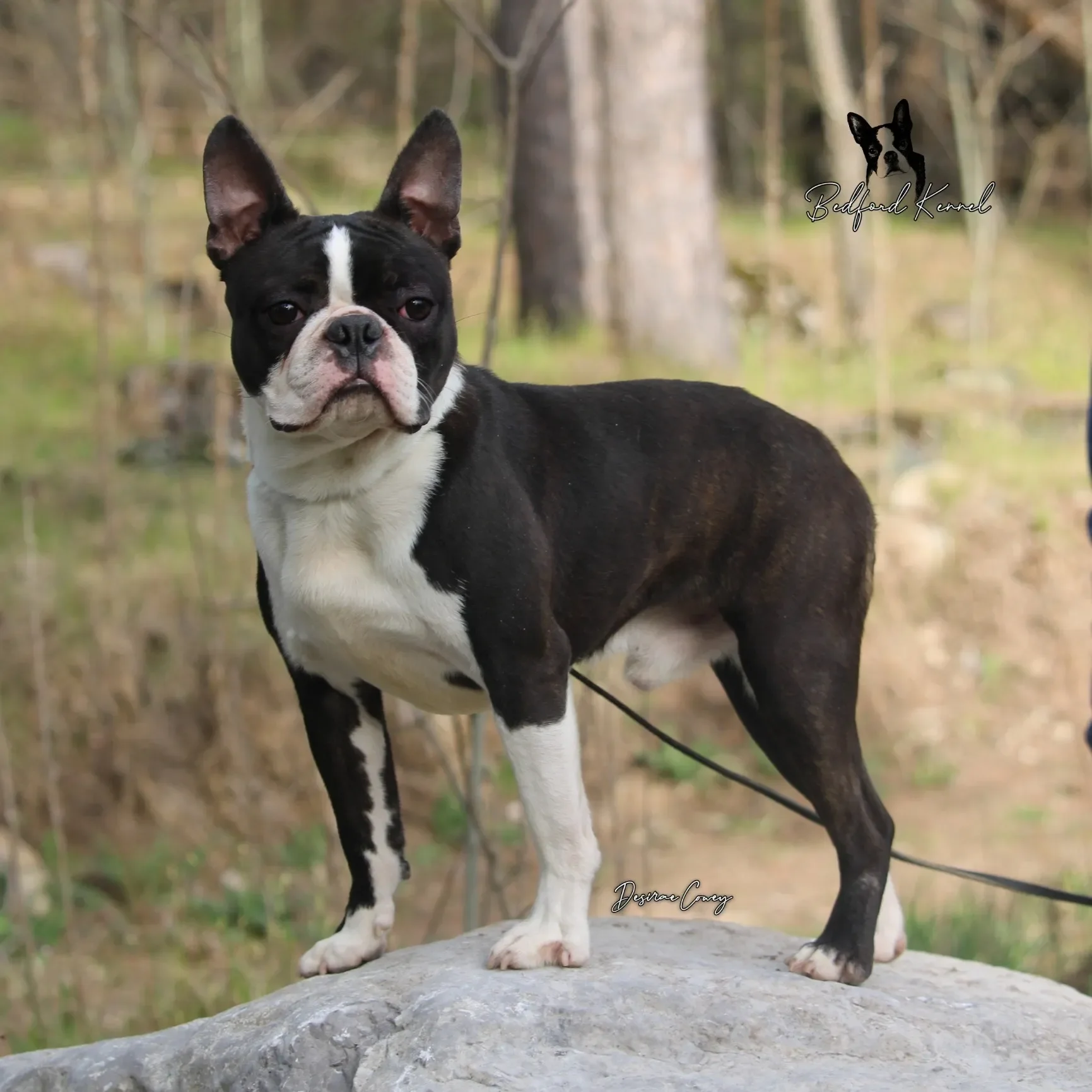
Mike, a black and white Boston Terrier, standing on a granite rock
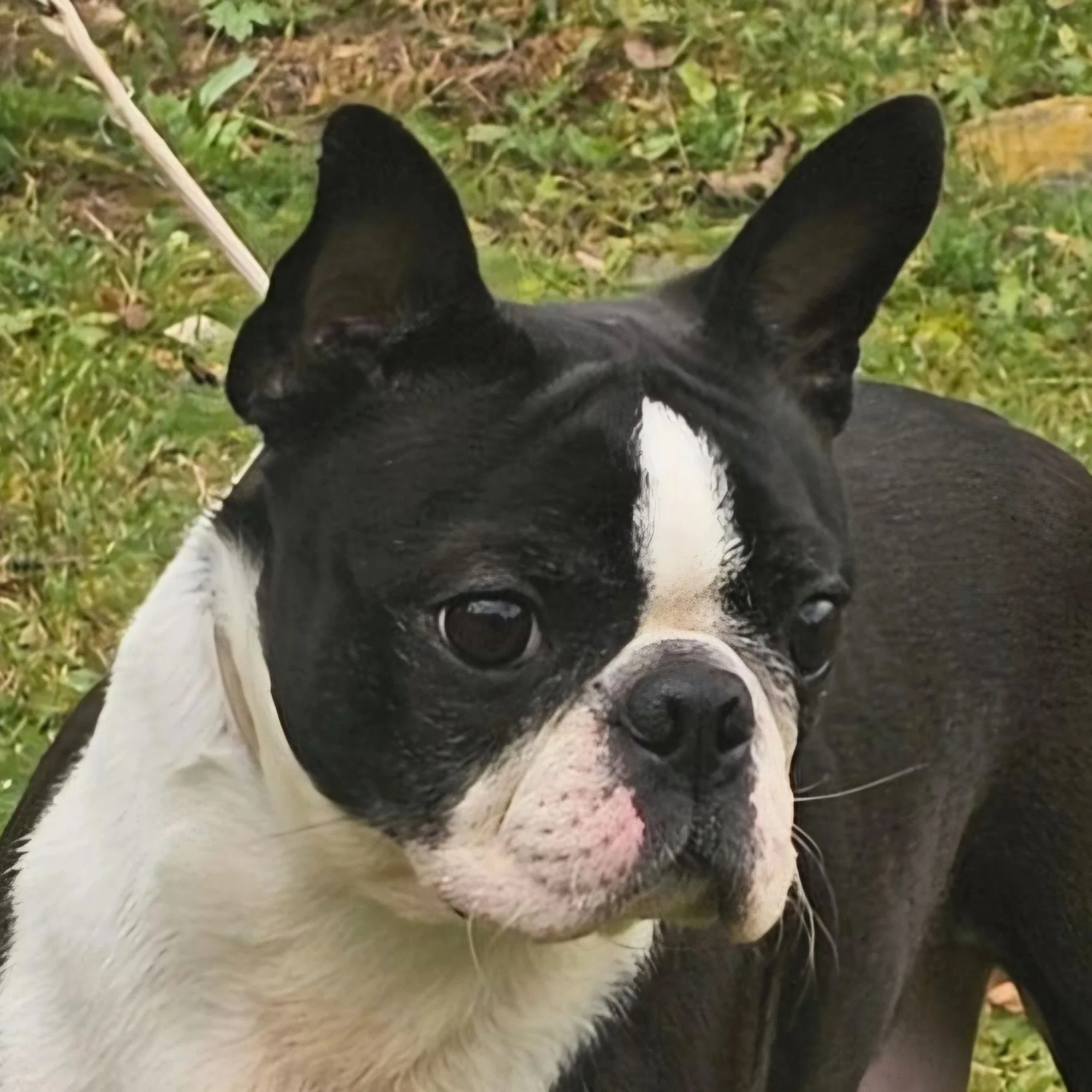
Bougie, a black and white Boston Terrier, in close profile
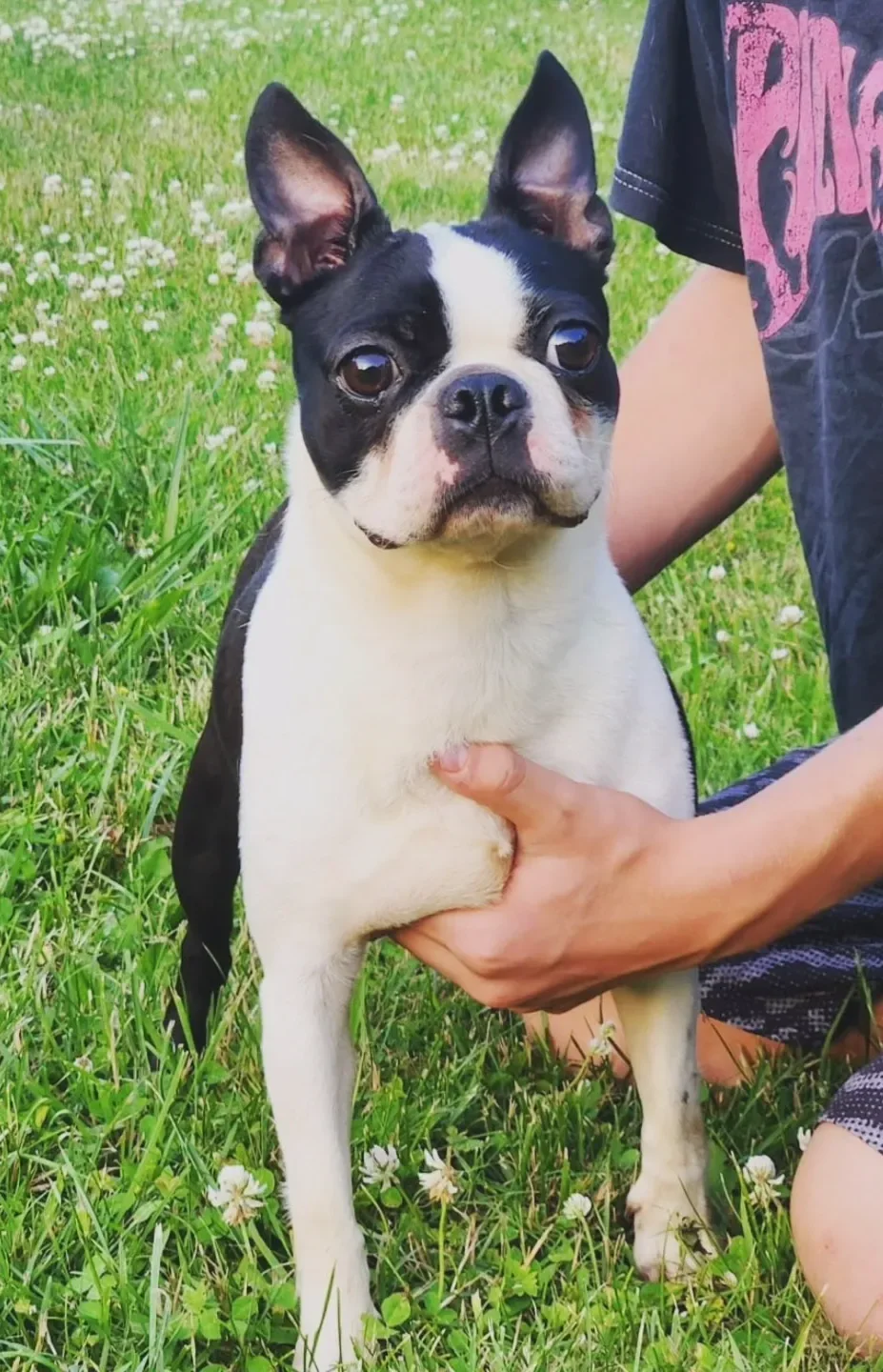
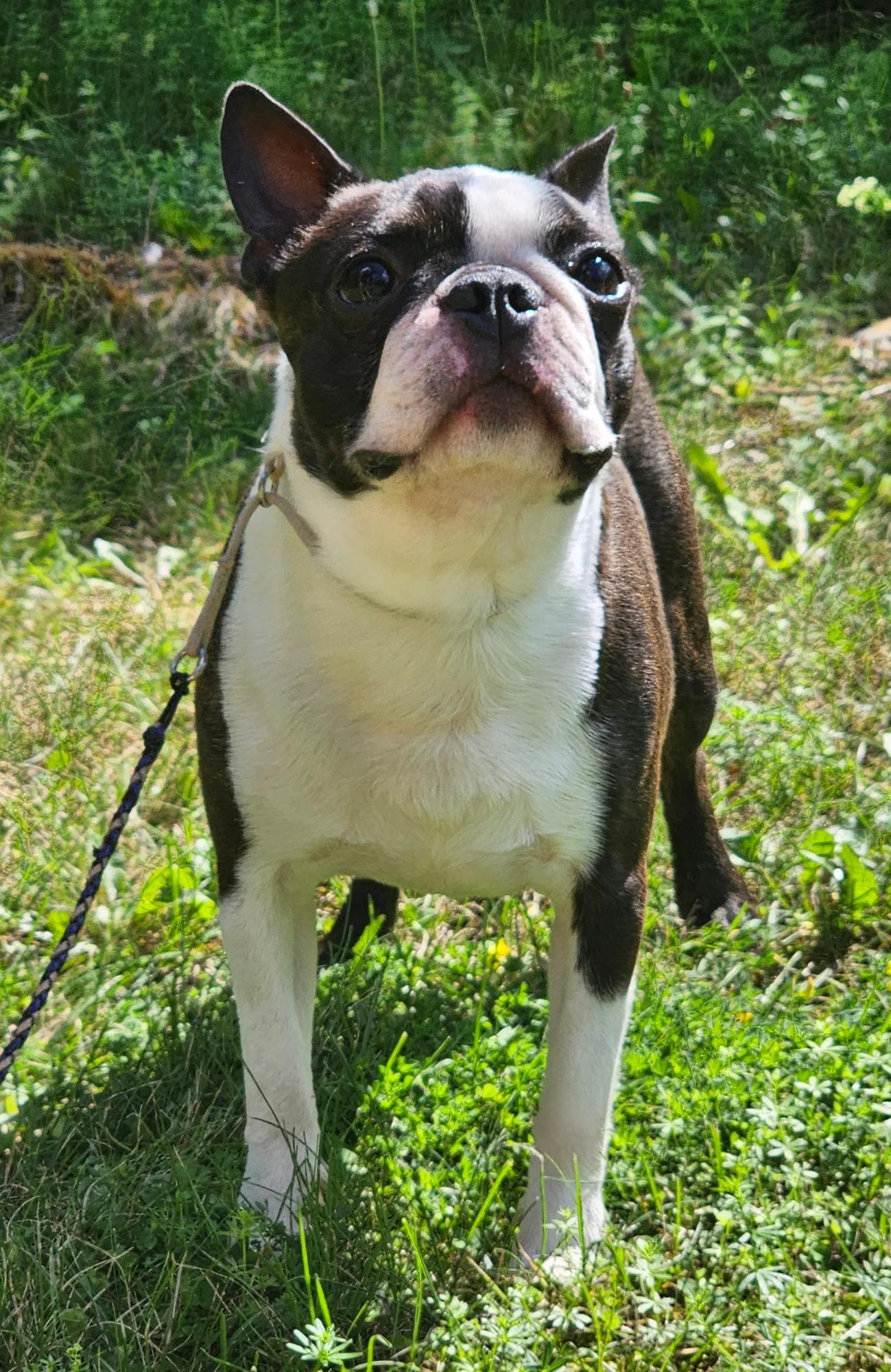
Everly, a black and white Boston Terrier, facing the camera
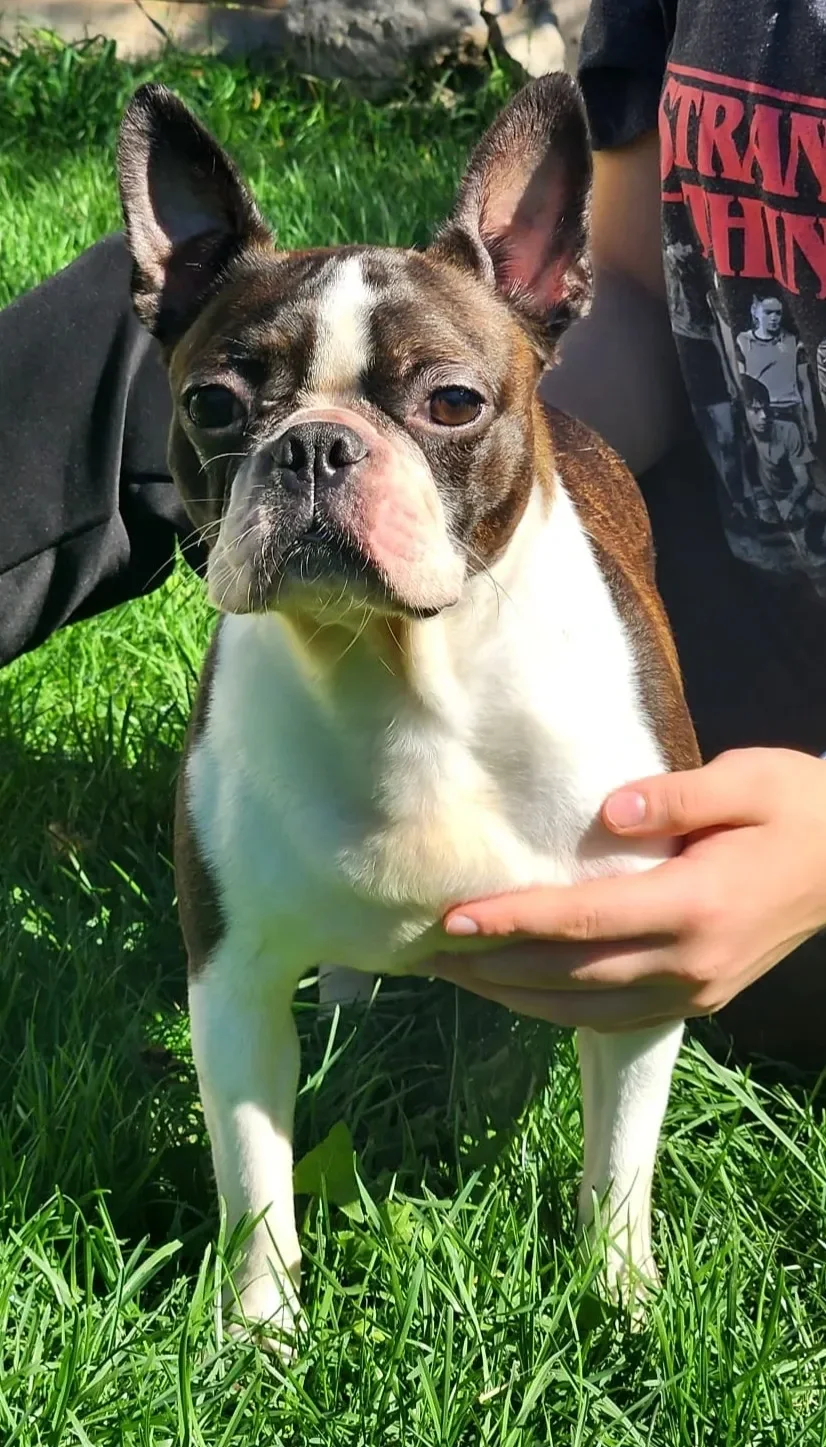
Ember, a brindle and white Boston Terrier, facing the camera
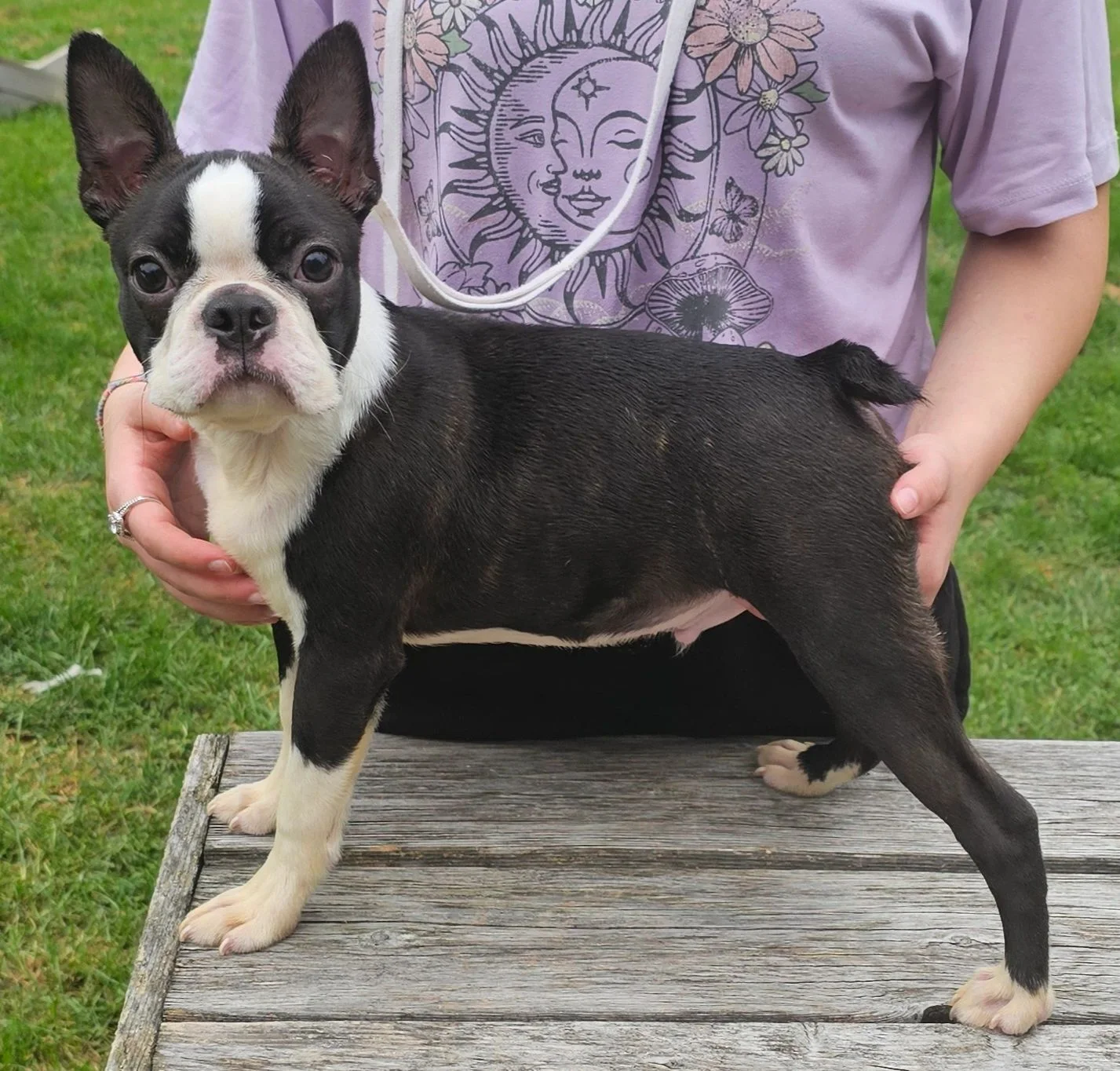
Remington, a Boston Terrier puppy, standing on a wooden table
Rio, a brindle and white Boston Terrier, facing the camera

Next Step

Meet Our Boston Terriers

If a Boston sounds like the right dog for your home, have a look at our dogs and at how we place our puppies.

See Our Boston TerriersRead The Adoption Process